
Lesson 3 · October 19, 1918
The Plagues
Lesson Scripture: Rev. 16:1-21.
Daily Study Outline
| Day | Study | Questions |
|---|---|---|
| Sabbath | Read "Daniel and the Revelation" on the lesson scripture. | |
| Sunday | The unmingled wrath of God, and the effects that follow | Ques. 1-4 |
| Monday | God's judgments true and righteous; men blaspheme God and repent not. | Ques. 5-7 |
| Tuesday | The sixth plague | Ques. 8-10 |
| Wednesday | Contest between nations; a warning and an admonition | Ques. 11-13 |
| Thursday | The seventh plague; closing scenes. Read "Story of the Seer of Patmos," pages 273-288 | Ques. 14-16 |
| Friday | Review the lesson. |
Questions
- 1.What command did the revelator hear given to the seven angels who held the vials of God's wrath? Rev. 16:1.
- 2.What was the result of the first plague? Verse 2. Note 1.
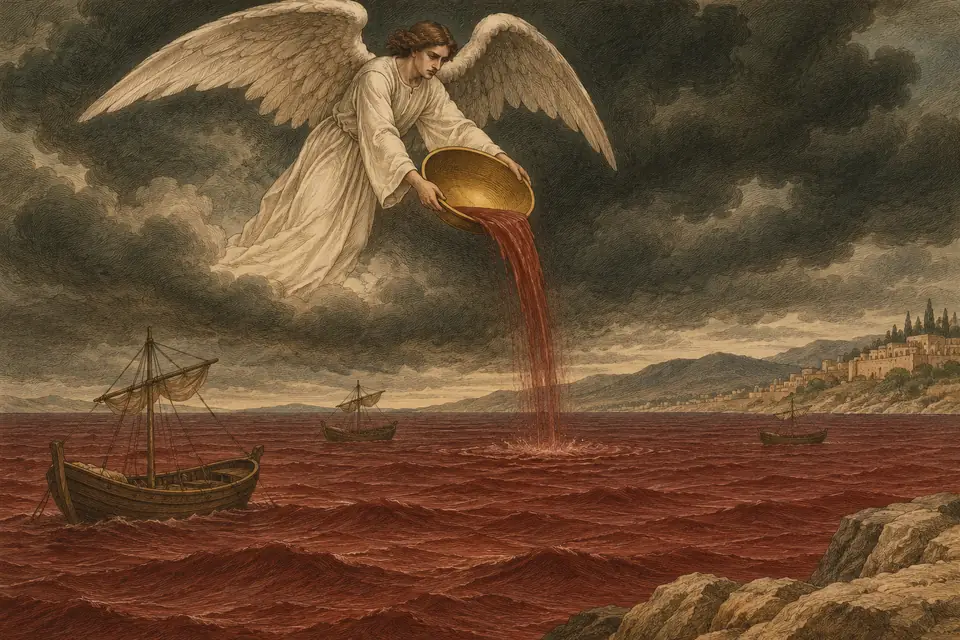
- 3.Where did the second angel pour out his vial? What was its effect? Verse 3.
- 4.What was the effect of the third plague? What reason was given for its peculiar character? Verses 4-6. Note 2.
- 5.What attributes of God's character may be seen even in these judgments? Verse 7.
- 6.How did the fourth plague affect men? What is revealed as to the character of those afflicted by it? Verses 8, 9. Note 3.
- 7.What were the character and effect of the fifth plague? Where did it fall? Verses 10, 11.
- 8.Where did the sixth plague fall? What was to be accomplished by it, and for what purpose? Verse 12.
- 9.What does the river Euphrates symbolize? Ans.—The territory through which the river flows, or the power governing that territory.
- 10.What Old Testament example shows that a river may represent a nation? Isa. 8:7.
- 11.For what are the kings of the earth prepared? By what agencies? Rev. 16:13, 14.
- 12.Who gathers them to the last great battle? What is that terrible conflict called? Verse 16.
- 13.What warning and admonition are given to those who live in this critical time? Verse 15.
- 14.What occurred when the seventh angel poured out his vial? Verse 17.
- 15.What great physical disturbances took place? Verses 18-21.
- 16.How is that final hailstorm described? Verse 21.
Notes
1. "When Christ ceases His intercession in the sanctuary, the unmingled wrath threatened against those who worship the beast and his image and receive his mark, will be poured out. The plagues upon Egypt when God was about to deliver Israel, were similar in character to those more terrible and extensive judgments which are to fall upon the world just before the final deliverance of God's people."—"The Great Controversy," pages 627, 628.
The word "noisome" means noxious, annoying or "very disagreeable to the sense of smell." One thinks of the terrible smell of putrid flesh which accompanies certain diseased conditions. This plague is similar in character to the sixth of the plagues of Egypt, when painful and loathsome boils and tumors afflicted man and beast.
2. "By condemning the people of God to death, they have as truly incurred the guilt of their blood as if it had been shed by their hands. In like manner Christ declared the Jews of His time guilty of all the blood of holy men which had been shed since the days of Abel; for they possessed the same spirit, and were seeking to do the same work, with these murderers of the prophets."—Id., page 628.
3. Judgments are God's calls to repentance. When longsuffering mercy is scorned, God may speak to the soul in sterner tones. "He is chastened also with pain upon his bed, and the multitude of his bones with strong pain: so that his life abhorred bread, and his soul dainty meat. His flesh is consumed away, that it cannot be seen; and his bones that were not seen stick out. Yea, his soul draweth near unto the grave, and his life to the destroyers. . . . Lo, all these things worketh God oftentimes with man, to bring back his soul from the pit, to be enlightened with the light of the living." Job 33:19-22, 29, 30.
But when neither the revelation of mercy and love, nor that of affliction and other judgments, has been able to bring the sinner to a sense of his sin during the day of probation, the case is hopeless. The seven last plagues reveal the stubborn and rebellious character of the lost. Further exhibitions of God's mercy would be unavailing, and their last breath is spent in blaspheming the God who has exhausted the resources of infinite love and wisdom to save them from their sins.
"These plagues are not universal, or the inhabitants of the earth would be wholly cut off. Yet they will be the most awful scourges that have ever been known to mortals. All the judgments upon men, prior to the close of probation, have been mingled with mercy. The pleading blood of Christ has shielded the sinner from receiving the full measure of his guilt; but in the final Judgment, wrath is poured out unmixed with mercy."—"The Great Controversy," pages 628, 629.
Bible texts in this lesson
Revelation 16:1-21 · Revelation 16:1 · Revelation 16:2 · Revelation 16:3 · Revelation 16:4-6 · Revelation 16:7 · Revelation 16:8 · Revelation 16:9 · Revelation 16:10 · Revelation 16:11 · Revelation 16:12 · Isaiah 8:7 · Revelation 16:13 · Revelation 16:14 · Revelation 16:16 · Revelation 16:15 · Revelation 16:17 · Revelation 16:18-21 · Revelation 16:21 · Job 33:19-22 · Job 33:29 · Job 33:30
My notes
Saved in this browser. Sign in to see your notes on other devices.